
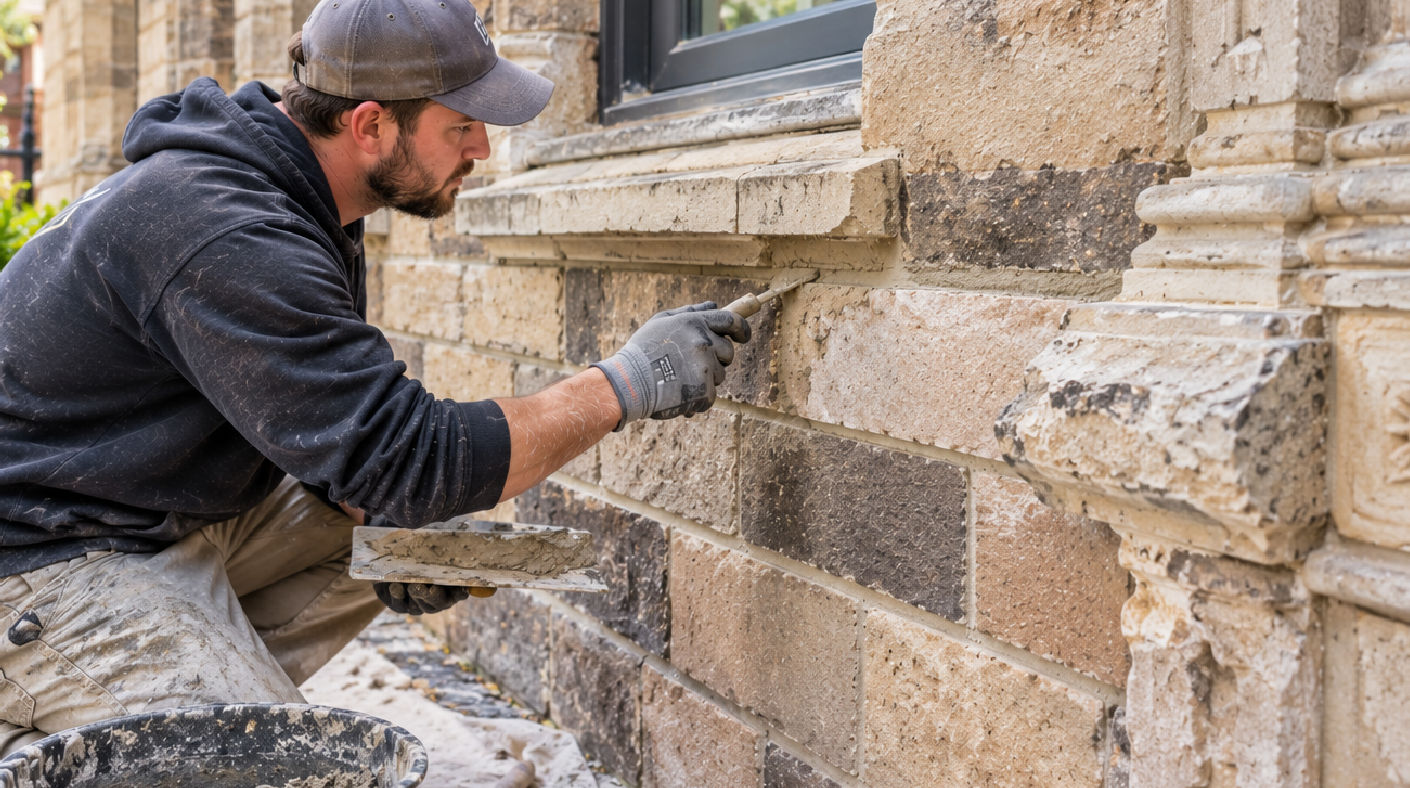
Sandstone Repointing in Sydney - Protect Ageing Stone Without Losing its Character
Repointing Worn Sandstone Joints in Sydney Properties
Loose, missing or deeply eroded mortar is removed from affected joints and replaced with a suitable mix that works with the existing stone.
Choosing the Right Pointing Mortar
Sandstone pointing mortar should not be unnecessarily hard or dense. Heritage NSW notes that traditional lime and sand mortar can be used for repointing deteriorated stone wall joints in appropriate heritage work.
Protecting Soft Stone Edges
Sandstone can be vulnerable around the edges of joints, especially where the surface has already weathered. Preparation needs to be controlled, so sound stone is not lost while the old mortar is being removed.
Restoring More Than the Joints
Where damage extends beyond the mortar, sandstone repair may also involve dealing with localised erosion, fractured sections or earlier repairs that are affecting the surrounding stone.


What are the Common Problems with Older Sandstone in Sydney Homes?
Sandstone does not always deteriorate in the same way as brick. Moisture and salts can play a significant role, particularly where water repeatedly moves through the stone and evaporates at the surface. According to Heritage NSW, salt-related decay in sandstone is a cause of softening and erosion, particularly where moisture remains present.
Previous repairs can also make matters worse. Hard cement-rich mortar may weather very differently from softer sandstone and can leave the surrounding stone taking more of the stress.
Why Sandstone Repointing and Restoration May Be Needed
Sandstone can deteriorate in several different ways, and the right repair depends on whether the problem is in the mortar joints, the stone itself or both. These are some of the clearest signs that repointing or restoration may be needed:
- Mortar has washed out or recessed, leaving joints open.
- Stone edges are becoming exposed and weathered.
- Salt or persistent moisture is causing softening or surface erosion.
- Existing hard cement repairs are not working well with the softer sandstone.
- Sections of stone are fractured, flaking or delaminating.
- Previous repairs are visibly mismatched or poorly finished.
- Boundary or retaining walls are showing heavier deterioration from ongoing moisture exposure.
- Heritage details are beginning to erode or lose definition.
Addressing these issues early can help retain more of the original sandstone and reduce the amount of replacement work needed later. In many cases, the best result comes from treating the failed joints and damaged stone separately rather than applying the same repair across the whole wall. Elite Tuck Pointing assesses both the mortar and the stone before recommending the level of sandstone repair or restoration the property actually needs. Get in touch with our experts today.
Frequently asked questions
What is sandstone repointing?
Sandstone repointing is the process of removing deteriorated mortar from between sandstone blocks and replacing it with a compatible pointing mortar done carefully to protect the stone itself, not just fix the joint.
Why does sandstone need a different approach to brick?
Sandstone is a natural, porous stone with very different properties to brick, so the mortar needs to match its strength, porosity, and moisture behaviour. Older Sydney sandstone was often built with lime mortar, and using a hard cement mix instead can damage the stone. Aggressive removal techniques can cause harm too.
How do I know if my sandstone needs repointing?
Common signs include loose or missing mortar, open or widening joints, gaps between blocks, cracking, damp patches, or old hard cement repairs that are visibly damaging the stone around them.
How much does sandstone repointing cost in Sydney?
Cost depends on how much jointing needs work, the condition of the stone, access and height, the mortar specification, and whether heritage requirements apply. Because every sandstone property is different, a site visit is the only reliable way to quote accurately.